
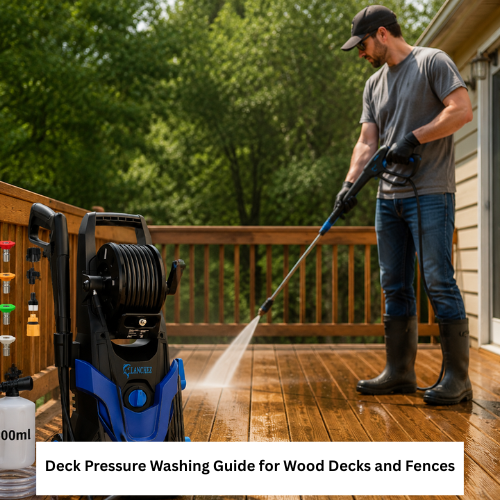
Careful deck pressure washing can remove loose dirt, surface grime, and some organic buildup from suitable outdoor wood, but excessive pressure can raise the grain, leave lines, strip finishes, or damage soft boards. Homeowners should inspect the structure, identify the wood and coating, and test a hidden area before cleaning the full surface.
Fence pressure washing requires the same caution. Older pickets, loose fasteners, cracked boards, and failing paint may need repair or a lower-pressure washing method first.
| Surface condition | Recommended approach | Avoid |
| Sound sealed wood | Test low pressure and wide spray | Holding the nozzle close |
| Weathered bare wood | Gentle cleaning and even passes | Cutting lines into soft grain |
| Peeling coating | Assess stripping and refinishing needs | Blasting loose paint into runoff |
| Cracked or loose boards | Repair before washing | Forcing water into damaged joints |
| Composite decking | Follow manufacturer instructions | Assuming wood settings are suitable |
Deck pressure washing should start with the least aggressive method that can complete the job. A soft wash deck approach may use an approved cleaner, dwell time, gentle agitation, and low-pressure rinsing instead of high pressure.
Equipment and Compatibility
A Karcher K1800PS electric pressure washer can be compared for deck, fence, and patio work, but verify the current nozzles, output, hose length, and manufacturer surface guidance.
A foam cannon and nozzle tip kit may help apply a compatible cleaner, but only use detergents approved for the washer, wood, nearby plants, and local drainage requirements.
A replacement pressure washer gun with extension wand can improve reach, provided the fittings, rated pressure, hose connection, and trigger lock match the machine.
A 50 foot flexible pressure washer hose can reduce machine movement around a backyard, but the hose diameter, fittings, temperature rating, and pressure rating must be compatible.
A Ryobi 12 inch surface cleaner is intended for compatible flat hard surfaces, so do not use it on a wood deck unless the product and deck manufacturers specifically allow it.
Step by Step Wood Deck Cleaning
Remove furniture, planters, rugs, and loose objects. Sweep the deck, cover sensitive outlets, protect nearby plants, and keep people and pets away. Repair loose boards and protruding fasteners before washing.
Apply an approved cleaner when needed. Follow the label for dilution, dwell time, protective equipment, and rinsing. Do not allow cleaner to dry on the wood.
Use a wide fan spray at a conservative distance. Work with the grain in smooth, overlapping passes. Keep the wand moving and avoid concentrating on edges, knots, rail joints, or one stained spot.
Rinse from the house outward while controlling runoff. Let the deck dry fully before replacing furniture or applying stain or sealer. Drying time depends on weather, shade, airflow, and wood condition.
Fence and Patio Cleaning Tips
For fences, work from top to bottom and support loose sections before cleaning. Spray at an angle that does not force water behind boards or into electrical fixtures. Clean both sides only when access and neighboring property rules allow it.
For patio cleaning, confirm whether the surface is concrete, stone, paver, tile, or coated material. A setting suitable for concrete may damage mortar, joints, sealers, or nearby wood.
Troubleshooting and Maintenance
Fuzzy wood usually indicates too much pressure, a close nozzle, or repeated passes. Stop and let the surface dry before deciding whether sanding is needed. Dark marks that remain may be staining, mildew, tannin, rust, or coating failure rather than removable dirt.
After cleaning, flush detergent, relieve pressure, inspect nozzles and hoses, and store equipment dry. Replace leaking fittings or damaged hoses before the next use.
Common Buying Mistakes
Common errors include starting too close, using a narrow tip, washing damaged wood, letting cleaner dry, and sealing before the surface is ready. Homeowners can review a Karcher K1800PS pressure washer listing and then verify the current output, included nozzles, hose, warranty, seller, and return terms.
Outdoor Cleaning Buying Checklist
- Identify wood, composite, coating, and existing damage.
- Choose adjustable pressure and a wide fan nozzle.
- Confirm hose, gun, wand, nozzle, and detergent compatibility.
- Measure hose reach and outdoor power access.
- Review plant, runoff, electrical, and slip safety.
- Check cleaning, drying, refinishing, and storage needs.
- Review replacement parts, warranty, return policy, delivery, and support.
- Verify before buying when output or surface guidance is unclear.
Conclusion
Deck pressure washing can support wood deck cleaning, fence pressure washing, patio cleaning, and backyard cleaning when homeowners use conservative pressure, compatible products, and proper drying time. Extreme power washing offers relevant washers and accessories for buyers planning safer outdoor wood cleaning.
FAQ
What pressure should I use on a wood deck?
Use the lowest effective setting and follow the deck and washer manufacturers’ guidance. Always test a hidden area first.
Can pressure washing damage a fence?
Yes. Excess pressure can split wood, raise grain, remove paint, and loosen weak boards or fasteners.
Should I use a surface cleaner on decking?
Not unless both the attachment and deck manufacturer allow it. Many surface cleaners are intended for hard flat surfaces.
How long should a deck dry before sealing?
Drying depends on weather, shade, airflow, and wood condition. Follow the coating manufacturer’s moisture and preparation requirements.
