
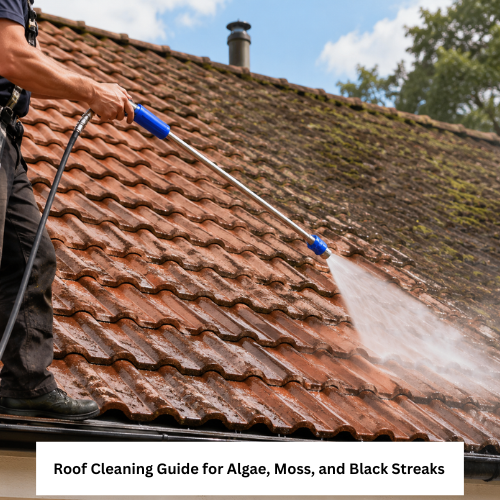
Safe roof cleaning starts with identifying the roofing material and the type of growth or stain before choosing chemicals, tools, or access equipment. Black streaks on asphalt shingles are often associated with algae, while thicker green growth may be moss or another plant material requiring a different approach.
Roof work combines slippery surfaces, chemical exposure, fragile materials, and fall hazards. Homeowners should consult the roofing manufacturer and strongly consider a trained professional rather than walking on or pressure washing the roof.
Extreme power washing equipment may support ground-level gutter, fascia, or exterior maintenance, but a pressure washer should not automatically be used on the roof surface.
Roof Cleaning Method by Roof Material
Roof cleaning requirements vary significantly between asphalt shingles, metal roofing, clay tile, concrete tile, slate, wood shakes, and synthetic roofing.
The roofing manufacturer’s written maintenance instructions should control the decision.
| Roofing material | Main cleaning concern | Method direction | What to verify |
| Asphalt shingles | Granule loss and lifted shingle edges | Manufacturer-approved solution and gentle rinse | Shingle brand and warranty |
| Metal roofing | Coating damage and slippery panels | Approved cleaner and nonabrasive method | Finish and fastener condition |
| Clay or concrete tile | Cracking and water entry | Material-specific low-impact process | Tile condition and walking restrictions |
| Slate | Fragility and specialist access | Professional assessment | Slate age and attachment |
Why High Pressure Is Risky on Asphalt Shingles
ARMA specifically states that power washers and brushes should not be used to remove algae from asphalt roofing. High-pressure systems are likely to damage asphalt roofing, while brushing can loosen surface granules.
ARMA also advises against using a pressure washer on an asphalt-shingle roof because it can cause granule loss and premature roof-system failure.
This means a pressure washer marketed for roofs, gutters, cars, or home exteriors should not be assumed to be suitable for asphalt shingles.
Ground-Level Inspection and Planning
Whenever practical, inspect from the ground using binoculars, a camera with zoom, or another safe observation method.
Look for:
- Missing shingles
- Lifted edges
- Cracked tiles
- Rusted flashing
- Sagging gutters
- Loose downspouts
- Damaged fascia
- Heavy moss
- Debris in valleys
- Stains around vents
- Signs of leaks inside the attic
A home-maintenance pressure washer guide can help buyers distinguish ground-level cleaning jobs from roof surfaces that need specialist care.
Do not use a stain as the only basis for diagnosing a leak. Water may travel from a different entry point.
Gutters, Fascia, and Roof Edges
Clean gutters help roof drainage and reduce standing debris around the roof edge. ARMA recommends keeping gutters clear and preventing upper-roof downspouts from draining directly across lower roofing.
A gutter and roof-edge cleaning tool may support selected ground-level maintenance, but it must not be used to blast asphalt shingles with high pressure.
Check:
- Maximum tool pressure
- Connector type
- Wand weight
- Extension length
- Nozzle direction
- Reaction force
- Overhead electrical hazards
- Gutter condition
- Safe operator position
Do not stand directly beneath falling debris or chemical runoff.
Wands and Extension Accessories
An angled pressure washer wand guide can help homeowners compare tool reach for ground-level gutters, soffits, and exterior surfaces.
A long wand increases leverage and may become difficult to control. Start with the equipment off and practice positioning before introducing water pressure.
Browse compatible pressure washer lances and wands when replacing an extension, but verify connector type, pressure rating, total weight, and intended surface.
Ground-level reach does not make high-pressure shingle cleaning safe.
Troubleshooting Common Problems
Black Streaks Return
Algae can recur. Review shade, tree debris, drainage, and the roofing manufacturer’s maintenance recommendations.
Moss Remains After Treatment
Dead moss may loosen gradually rather than disappearing immediately. Do not scrape it aggressively.
Shingles Look Bare or Rough
Granule loss may have occurred. Stop cleaning and request a roofing inspection.
Cleaner Runs Down the Siding
Rinse and manage the runoff according to both the cleaner and siding manufacturer’s instructions.
A Gutter Overflows During Rinsing
Stop the process. The gutter or downspout may be blocked or unable to manage the flow.
Water Appears in the Attic
Stop cleaning and arrange a roof inspection. Water may have entered around damaged roofing, flashing, vents, or other openings.
Equipment Cleaning and Maintenance
After using approved cleaning equipment:
- Follow the chemical-flushing procedure.
- Rinse hoses and compatible pumps.
- Clean filters.
- Inspect seals.
- Empty solution containers.
- Dry wands and fittings.
- Check nozzles for blockage.
- Store chemicals in original labeled containers.
- Keep equipment away from freezing conditions when required.
Chemical compatibility is especially important for pumps, hoses, seals, fittings, and metals.
Do not store mixed cleaning solution unless the product label specifically permits it.
The AgiiMan gutter cleaning attachment listing can help shoppers compare wand angles and ground-level access features, but verifies its current pressure rating, fittings, intended surfaces, seller, and package contents.
Choosing a Roof-Cleaning Contractor
Ask the contractor to explain:
- The identified roof material
- The type of stain or growth
- The proposed cleaner
- The application pressure
- Manufacturer compatibility
- Plant and property protection
- Runoff management
- Fall-protection procedures
- Insurance
- Licensing where required
- Warranty implications
- Repair recommendations
Avoid a contractor who proposes high-pressure washing for asphalt shingles or promises that every stain will disappear immediately.
Check references and obtain written details before work begins.
Conclusion
Effective roof cleaning depends on correctly identifying the roofing material and stain, following the roof manufacturer’s approved method, and avoiding aggressive pressure or scraping. Asphalt shingles should be treated gently, and direct roof access should usually be left to trained professionals. Ongoing gutter care, debris removal, drainage checks, and tree maintenance can also reduce conditions that support recurring algae and moss.
FAQ
What causes black streaks on asphalt shingles?
The streaks are commonly associated with algae, although soot, dirt, moss, and tree debris can look similar.
Can moss damage asphalt shingles?
Heavy moss can lift or curl shingle edges and may contribute to water movement beneath the roofing.
Can I use a pressure washer on an asphalt roof?
No. ARMA advises against high-pressure washing because it can damage asphalt roofing and remove protective granules.
Should moss be scraped from the roof?
Do not aggressively scrape attached moss. Follow the shingle manufacturer’s treatment and removal instructions.
How can I reduce future growth?
Keep gutters clear, reduce excessive shade where practical, remove debris gently, and maintain proper roof drainage.
