
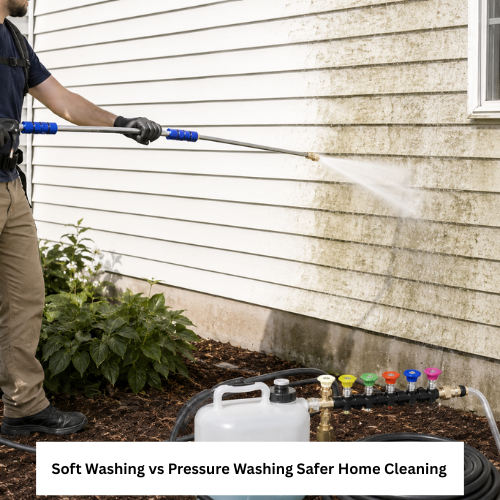
Choosing between soft washing and pressure washing depends on the surface, type of buildup, material condition, and cleaning product being used. Low-pressure cleaning may be more appropriate for painted siding, shingles, delicate trim, and surfaces where excessive force could drive water into joints or damage the finish.
Pressure washing can be useful for durable exterior surfaces such as suitable concrete, masonry, and selected hardscape areas. However, high pressure should not be treated as the default method for every exterior cleaning job.
Homeowners using extreme power washing equipment should identify the surface manufacturer, inspect existing damage, and test the selected method in a small hidden area before cleaning the entire property.
| Buying or project factor | Low-pressure method | Pressure washing | What to verify |
| Main cleaning action | Approved cleaner, dwell time, and gentle rinse | Water force and nozzle impact | Surface-manufacturer guidance |
| Typical surface use | Siding, trim, selected roofing, and delicate exteriors | Suitable concrete, masonry, and durable hardscape | Material condition and coating |
| Equipment | Pump or detergent system, hose, applicator, and rinse nozzle | Pressure washer, hose, gun, wand, and nozzles | Pressure and chemical compatibility |
| Risk of physical damage | Lower impact but chemical risk remains | Greater risk of etching, stripping, or water intrusion | Test area and pressure limits |
When Soft Washing Is Safer
Soft washing may be the safer starting point when the exterior surface can be damaged by aggressive spray or when the main problem is organic staining rather than embedded hard-surface dirt.
Possible applications include:
- Painted siding
- Vinyl siding
- Fiber-cement siding
- Stucco in sound condition
- Delicate trim
- Selected roof materials
- Shaded walls with organic staining
- Areas around windows, vents, and seams
The siding or roofing manufacturer’s instructions should take priority over general advice. For example, James Hardie recommends a low-pressure hose and soft, nonmetal brush rather than a high-pressure washer for its siding products.
A safe pressure washing resource can help homeowners think about surface limits before choosing equipment.
Choosing the Correct Cleaner
The cleaner must be compatible with the surface, surrounding landscaping, coating, seals, and application equipment.
A siding-cleaning soap guide can help buyers compare detergent use while checking the siding manufacturer’s instructions.
Before using any chemical:
- Read the complete label.
- Confirm the intended surface.
- Follow dilution directions.
- Wear the listed protective equipment.
- Test a hidden area.
- Protect plants and painted surfaces.
- Prevent the solution from entering unwanted drains.
- Keep children and pets away.
- Do not combine different cleaners.
Never mix bleach with ammonia, acids, or another product unless the manufacturer explicitly directs that combination.
Do not allow a cleaning solution to dry on the surface unless the label specifically permits it.
Pressure, Nozzle, and Spray-Pattern Checks
A narrow nozzle concentrates force into a smaller area. A wider spray generally spreads the impact, but it is not automatically safe at close range.
Use a surface-safe nozzle guide to compare spray patterns while checking the equipment and surface manuals.
Before starting:
- Install the correct nozzle with the machine off.
- Confirm that the nozzle is locked.
- Begin at a greater distance.
- Aim at a test area.
- Use the lowest effective setting.
- Keep the wand moving.
- Avoid spraying directly into seams.
- Do not aim upward beneath siding laps.
- Keep spray away from people and animals.
The adjustable spray settings guide can help buyers understand how distance, spray width, and pressure control affect different exterior surfaces.
Equipment Setup and Compatibility
A soft washing setup may involve a detergent tank, downstream injector, dedicated pump, chemical-resistant hose, low-pressure nozzle, or separate rinse equipment. Compatibility depends on the exact chemical and machine.
Check:
- Pump chemical compatibility
- Hose and seal compatibility
- Nozzle orifice
- Maximum and minimum pressure
- Water-supply requirements
- Connector size
- Wand length
- Filter requirements
- Detergent-draw operation
- Rinse procedure
A pressure washer not designed for a particular chemical may suffer seal, hose, or pump damage.
Browse compatible pressure washer lances and wands when replacing an application or rinse tool, but match every connector and pressure rating to the equipment.
Cleaning and Equipment Maintenance
After using detergent:
- Follow the machine’s rinse procedure.
- Flush compatible lines when instructed.
- Empty and rinse detergent containers.
- Clean filters.
- Inspect nozzles.
- Check seals and O-rings.
- Drain hoses.
- Allow equipment to dry.
- Store chemicals in original labeled containers.
Do not leave chemical solution inside equipment longer than permitted by the manufacturer.
Coil hoses without sharp bends. Store nozzles and fittings where dirt cannot enter their openings.
The PowRyte electric pressure washer with detergent listing can help shoppers compare detergent-delivery features, but verify its current pressure settings, included nozzles, chemical restrictions, seller, and package contents.
Conclusion
Soft washing is generally the better starting point for delicate exterior materials when the manufacturer permits an approved low-pressure cleaner and rinse. Pressure washing may be effective on suitable hard surfaces, but it requires careful nozzle, distance, pressure, and runoff control. Inspect the property, follow material-specific instructions, and hire a qualified professional when elevated access or uncertain surface conditions increase the risk.
FAQ
Is low-pressure cleaning safe for every type of siding?
No. Follow the siding manufacturer’s cleaning instructions and test a small hidden area first.
Can pressure washing damage siding?
Yes. Excessive pressure or incorrect spray direction can damage finishes or force water into seams and joints.
Can I pressure wash an asphalt-shingle roof?
ARMA advises against power washing asphalt shingles because high pressure can damage the roofing surface.
What nozzle should I use for house washing?
Use only a nozzle and setting approved for the machine and surface. Begin with a broad pattern and the lowest effective pressure.
Should I hire a professional?
Professional help is appropriate for roof work, difficult access, fragile materials, chemical uncertainty, or existing exterior damage.
