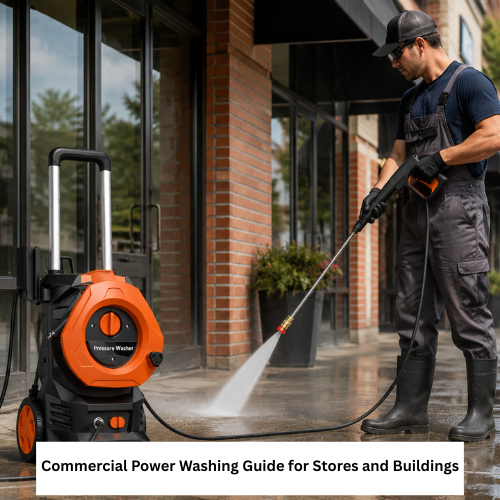
Professional commercial power washing can remove loose dirt, traffic film, organic buildup, and surface grime from suitable storefronts, walkways, loading areas, and building exteriors. The service can improve presentation, support routine exterior maintenance, and prepare compatible surfaces for inspection or coating work.
Results depend on the surface, stain, equipment, detergent, water flow, operator skill, and local rules. Fragile masonry, damaged mortar, painted signs, electrical fixtures, windows, and sealants may need lower pressure or another cleaning method.
| Area | Main benefit | Important check |
| Storefront | Cleaner customer-facing surfaces | Protect signs, glass, doors, and displays |
| Building exterior | Removes suitable surface buildup | Identify siding, masonry, paint, and damage |
| Sidewalk | More even cleaning than a narrow spray | Control runoff and pedestrian access |
| Parking area | Helps remove loose grime and deposits | Check oil disposal and drainage rules |
| Loading zone | Supports routine property care | Schedule around vehicles and workers |
A commercial power washing plan is most useful when it is built around the material, business schedule, and runoff controls. A small test area cleaned first, and wastewater must directed into prohibited drains or neighboring property.
Equipment for Business Property Cleaning
A 4200 PSI gas pressure washer with a Viper pump may suit demanding exterior work, but buyers should verify current pressure, flow, engine, hose, and surface compatibility before buying.
A stainless steel pressure washer surface cleaner can improve consistency on compatible flat concrete, but it assumed safe for wood, loose pavers, damaged coatings, or fragile surfaces.
A 100 foot heavy duty pressure washer hose reel can reduce tangled hose around entrances and work zones, provided the reel rating, hose size, fittings, mounting surface, and machine output match.
A multiple degree pressure washer nozzle tip set gives operators several spray patterns, but every tip must match the washer, flow rate, connection, and surface being cleaned.
Safe Setup and Service Planning
Close the work area to customers and vehicles. Remove movable items, cover sensitive fixtures, shut nearby windows, and identify electrical outlets, cameras, vents, and damaged surfaces. Wear eye, hearing, hand, and slip-resistant protection suitable for the equipment and cleaning chemical.
Never point the spray at people, animals, electrical systems, glass edges, or loose building material. Follow the detergent label and equipment manual. Contractors should also check water access, noise limits, insurance, local runoff rules, and whether after-hours work is required.
Common Problems and Maintenance
Uneven cleaning often comes from inconsistent distance, overlapping, blocked nozzles, or unsuitable pressure. Streaks may require slower, even passes rather than a stronger tip. If the machine pulses, loses pressure, leaks, or overheats, stop and inspect the water supply, filter, hose, fittings, nozzle, and pump instructions.
After use, flush approved detergent, relieve pressure, inspect hoses and seals, clean filters, and store equipment dry. Replace cracked hoses, damaged trigger guns, worn O-rings, or leaking fittings with compatible parts.
Common Buying Mistakes
Choosing by maximum pressure alone, ignoring runoff rules, using one nozzle on every surface, and buying incompatible hoses or fittings can increase risk and downtime. Buyers can review a Sun Joe commercial pressure washer listing and then verify the current pressure, flow, included accessories, warranty, seller, and return terms.
Equipment Buying Checklist
- Match pressure and flow to the intended surfaces.
- Confirm hose, nozzle, gun, pump, and fitting compatibility.
- Measure access routes, storage space, and hose reach.
- Check surface cleaner size and machine requirements.
- Review safety, runoff, detergent, and electrical controls.
- Confirm setup, cleaning, winterizing, and maintenance steps.
- Check replacement parts, warranty, return policy, delivery, and support.
- Verify before buying when specifications or included parts are unclear.
Conclusion
Commercial power washing can support storefront cleaning, building exterior cleaning, parking lot cleaning, and routine business property care when the pressure, detergent, equipment, and runoff plan suit the site. Extreme power washing offers relevant washers and accessories for buyers comparing commercial cleaning equipment.
FAQ
How often should a storefront be power washed?
Frequency depends on traffic, weather, nearby roads, surface type, and appearance standards. Inspect the property and schedule cleaning as needed.
Can every building exterior be pressure washed?
No. Damaged masonry, soft materials, failing paint, and sensitive seals may require lower pressure or another method.
Is a surface cleaner useful for commercial work?
It can improve consistency on compatible flat hard surfaces. Verify pressure, flow, diameter, and surface suitability.
What should a contractor verify before starting?
Confirm water access, drainage rules, surface condition, pedestrian control, electrical risks, detergent use, insurance, and cleanup requirements.
