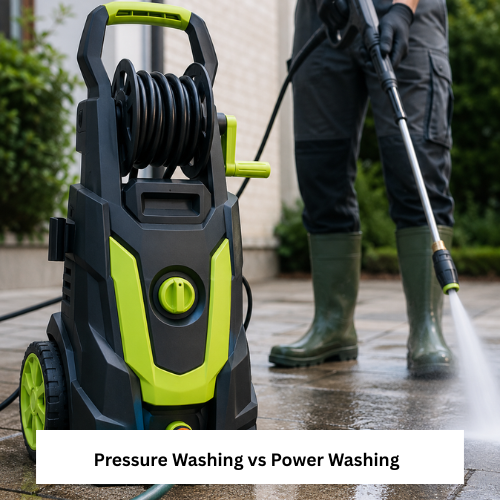
The pressure washing vs power washing difference is important because the wrong cleaning method can damage siding, wood, paint, seals, or delicate outdoor surfaces. Both methods use pressurized water, but power washing is often associated with heated water, while pressure washing usually means high-pressure water without heat.
For homeowners, property managers, DIY cleaners, and contractors, the right choice depends on surface material, stain type, safety risk, cleaning temperature, and equipment compatibility. Always verify surface suitability before cleaning.
Pressure Washing vs Power Washing for Home Cleaning
Pressure washing vs power washing is mostly about cleaning method, water pressure, and whether heated water is involved. Hot water can help with grease or oily buildup, but it is not always need for regular dirt or light outdoor cleaning.
Before choosing a method, inspect the surface. Cracked concrete, soft wood, painted siding, older brick, loose trim, and window seals need extra care.
Power Washing Basics
Power washing is commonly used when heated water may help loosen grime, grease, or heavy buildup. It may be useful for certain hard surfaces, but it matche carefully to the material.
Do not assume heated water is safer or stronger for every job. Heat and pressure can both create damage when used incorrectly.
Pressure Washing Basics
Pressure washing uses pressurized water for exterior surface cleaning. It is commonly used for driveways, patios, walkways, outdoor furniture, and some siding projects when the correct pressure and nozzle are used.
For driveway cleaning, homeowners can review pressure washing driveway before and after tips before choosing a method or attachment.
| Feature | Pressure Washing | Power Washing | What to Verify |
| Water temperature | Usually unheated water | Often heated water | Whether heat is needed |
| Best use | Dirt, mud, light buildup | Grease, heavy grime, certain hard surfaces | Surface material and stain type |
| Surface risk | Can damage with too much pressure | Can damage with pressure and heat | Paint, wood, seals, and age |
| Equipment needs | Pressure washer, hose, nozzle | Power washer or heated system | Machine instructions |
| Beginner use | More common for DIY cleaning | May need more caution | Safety and compatibility |
| Maintenance | Nozzles, hoses, filters, pump care | Similar plus heat-system checks | Manual and parts support |
Hot Water Power Washing: When It May Help
Hot water power washing may help with oily residue, grease, and heavy buildup on some hard surfaces. However, heat is not automatically better for every surface.
Avoid using heat on materials that may warp, soften, peel, or react badly. If the surface or product instructions are unclear, verify before cleaning.
Exterior Surface Cleaning Safety
Exterior surface cleaning requires the right nozzle, distance, angle, and pressure setting. Strong spray can cut skin, damage surfaces, push water into gaps, and loosen paint.
A professional cleaning nozzles kit may help users match spray patterns to different cleaning jobs, but connector type and pressure compatibility checke before buying.
Driveway Pressure Washing and Surface Cleaners
Driveway pressure washing can work well when the surface is sound and the right attachment is used. A surface cleaner can help reduce streaking on flat concrete, but it must match the pressure washer.
Buyers can review best surface cleaner attachment for pressure washer guidance before choosing a flat-surface cleaning tool.
House Washing Service Considerations
A house washing service should explain the cleaning method, surface risk, water pressure, cleaning solution, and what areas protecte. Siding, windows, vents, and electrical outlets need caution.
If you are comparing DIY cleaning with hiring help, review best pressure washing equipment to buy online so you understand common equipment needs before making a decision.
Maintenance and Equipment Checks
Both methods require equipment care. Check hoses, seals, nozzles, filters, pumps, connectors, and spray guns before use.
If pressure drops, inspect for leaks, clogged filters, damaged nozzles, or weak water supply. If the machine overheats, smells unusual, or vibrates heavily, stop and follow the manual.
You can compare a pressure washer gauge example if you want to understand how pressure-checking accessories are commonly used.
Common Cleaning Mistakes
Do not use maximum pressure as the default setting. Start with a safer test area and adjust only when needed.
Do not spray upward under siding, into vents, near electrical outlets, or directly at window seals. Do not use heated water on surfaces that damage by heat.
Practical Buying Checklist
- Identify whether you need pressure washing or power washing.
- Check whether hot water is necessary for the stain.
- Verify surface type, age, paint, sealant, and condition.
- Choose the correct nozzle and spray distance.
- Check hose, connector, pressure rating, and machine compatibility.
- Review safety instructions before use.
- Confirm cleaning solution suitability.
- Check maintenance needs for nozzles, filters, pumps, and hoses.
- Review warranty, return policy, delivery, and support before buying equipment.
- Verify before buying if pressure rating, heat use, or accessory fit is unclear.
Conclusion
The pressure washing vs power washing choice depends on stain type, surface material, water temperature, pressure level, and safety needs. Pressure washing is often enough for many home cleaning jobs, while power washing may help with tougher buildup on suitable surfaces, but both methods require careful setup and verification.
FAQ
What is the main difference between pressure washing and power washing?
Power washing is often link with heated water, while pressure washing usually uses high-pressure water without heat.
Is power washing better than pressure washing?
Not always. Power washing may help with grease or heavy buildup, but pressure washing may be enough for many outdoor surfaces.
Can pressure washing damage a house?
Yes. High pressure can damage siding, paint, seals, windows, and vents if used incorrectly.
Is hot water power washing safe for all surfaces?
No. Heat can damage some materials, so verify surface suitability before using hot water.
What should I check before buying pressure washer accessories?
Check connector size, pressure rating, machine type, nozzle angle, hose fit, and product compatibility.
